New Delhi [India], January 6: On January 5 and 6, 2026, the IndiaAI Mission, the Ministry of Electronics and Information Technology, the Government of Assam and IIT Guwahati held a two-day Human Capital Working Group meeting. On paper, it appeared as yet another policy consultation. At ground level, it was a fresh start.
It did not involve selling AI as a silver bullet. It was about asking embarrassing questions. Who benefits from AI? Who gets displaced? Who gets left behind when there is not enough speed, and who gets trampled when there are no guardrails?
The discussions will directly contribute to the India AI Impact Summit 2026, which will take place in New Delhi. That fact alone signals seriousness. Human capital is no longer a periphery. It is the spine.
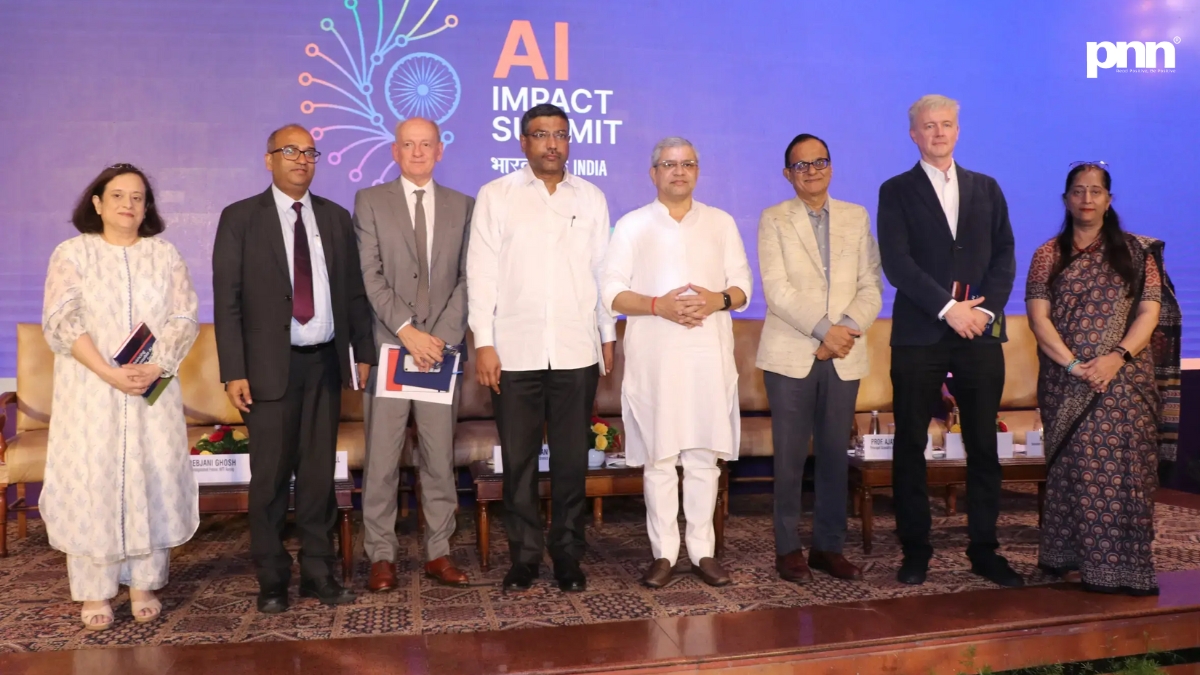
Guwahati as the Policy Testbed
There is symbolism in Assam hosting this meeting. India’s AI policy has been metro-heavy. New Delhi drafts. Bengaluru builds—Hyderabad scales. Holding national AI human capital talks in Guwahati turns that equation on its head.
Prof. Devendra Jalihal, Director of IIT Guwahati, set the pace. He positioned the institute not just as a technology hub, but as a gathering ground where policy, academia, industry and students intersect. Student involvement was not cosmetic. It reflected a generation that understands AI will shape their jobs whether policymakers like it or not.
It was also here that regional perspectives entered national policy thinking. Northeast India is not an AI appendix. It is an inclusion-and-adoption test case.
Human Capital and Lifelong Learning: The Big Pivot
If there was one phrase repeated across sessions, it was this: skilling is not enough.
Prof. T. G. Sitharam, Chair of the Human Capital Working Group, was direct. Piecemeal skilling programmes will not survive the AI economy. India needs lifelong learning ecosystems that value flexibility, judgment and human-centred capabilities alongside technical skills.
Translation: teaching Python once and calling it future-ready is a bad joke.
The focus shifted from automation to augmentation. AI should expand human capability, not replace it. This is not only a philosophical shift, but an economic one. Given India’s workforce scale, mass displacement is not hypothetical. It is a political and social reality.
This concern was reinforced by Shri K. S. Gopinath Narayan, Principal Secretary (IT), Government of Assam, who cautioned that unchecked automation could widen inequalities across regions and sectors. His emphasis on micro-skilling, continuous learning and AI literacy framed these not as elite skills, but as public capabilities.
India AI, the Global South and the Sovereignty Question
Ms Shikha Dahiya, Joint Director, IndiaAI, explained why the India AI Impact Summit 2026 matters beyond India. It is not just about domestic readiness, but about shaping a Global South narrative on AI.
IndiaAI’s work on compute capacity, indigenous datasets and homegrown models was positioned as foundational to human capital development. Without sovereign AI infrastructure, human capital strategies risk collapsing into dependency.
This matters because AI power is already concentrated globally. Shri Syedain Abbasi, Special Chief Secretary, Government of Assam, did not soften his words. AI today is not merely a tool, but an autonomous agent. That changes the risk profile entirely.
He also voiced what many policy rooms avoid acknowledging. India’s traditional IT and outsourcing employment model is vulnerable. If AI capability remains concentrated among a few global players, job erosion will not be gradual. It will be abrupt.
The response, as discussed, lies in indigenous computing, public–private collaboration and differentiated skilling pathways across education levels.
Human Capital and Gender Inclusion in the AI Workforce
One of the most grounded discussions focused on gender-responsive strategies for the AI transition. This was not a checkbox session.
Panellists highlighted risks already visible on the ground—automation of entry-level roles with high female participation. Wage gaps widened by unequal access to AI skills—bias embedded in data and algorithms.
The message was consistent. Inclusion cannot be retrofitted. It must be built into AI systems, skilling programmes and adoption strategies from the start.
Moderated by Ms. Arpitha Desai of The Asia Group, the panel brought together voices from government, industry and academia. The focus was on explainable AI, adoption-led reskilling and ecosystem-driven policy interventions. Not slogans. Systems.
Reinventing Education for the Cognitive Age
Perhaps the most consequential session centred on education reform. The term “cognitive age” was used deliberately.
The panel on redefining education examined how AI is reshaping learning objectives, pedagogy and assessment. Rote memorisation was declared obsolete. Process-oriented and cognitive learning took centre stage.
Used well, AI can personalise learning and reduce administrative burdens on teachers. Used poorly, it can reduce education to scaled content consumption.
Panellists stressed the need for human-centric, community-tested AI tools and closer alignment between education systems and fast-evolving industry requirements. Adaptability, critical thinking, collaboration and lifelong learning emerged as non-negotiables.
This is where India’s demographic advantage will either compound or collapse.
Human Capital Implications for the India AI Impact Summit 2026
The Guwahati meeting is not an end in itself. It is a funnel.
Its outcomes will be consolidated into recommendations that inform national policy decisions and global-level discussions at the India AI Impact Summit 2026. That summit will culminate in leaders’ plenaries and working group outcomes in New Delhi.
The throughline is unmistakable. India is positioning human capital not as collateral damage of AI, but as its primary beneficiary.
This aligns squarely with the vision of Viksit Bharat 2047. Growth without dignity is not development. AI without inclusion is not progress.
India AI Impact Summit 2026
India AI Impact Summit 2026 – official summit portal
Official IndiaAI Mission
Ministry of Electronics & Information Technology – IndiaAI Mission official page
PNN News